Most uncomfortable sandals are not uncomfortable because they are cheap. They are uncomfortable because one of four things is wrong: the footbed is flat and hard, the straps sit in the wrong place, the heel is too steep, or the shoe is the right length and the wrong width.
Check those four and summer gets considerably easier.
1. The footbed
Press your thumb into the middle of the insole. If it does not give at all, your feet will feel every footpath by mid-afternoon. A moulded or cushioned footbed spreads the load instead of leaving it under the ball of your foot. It is the single biggest difference between a sandal you keep wearing and one that stays in the cupboard.
See comfort shoes for styles built on a cushioned base.
2. Where the straps sit
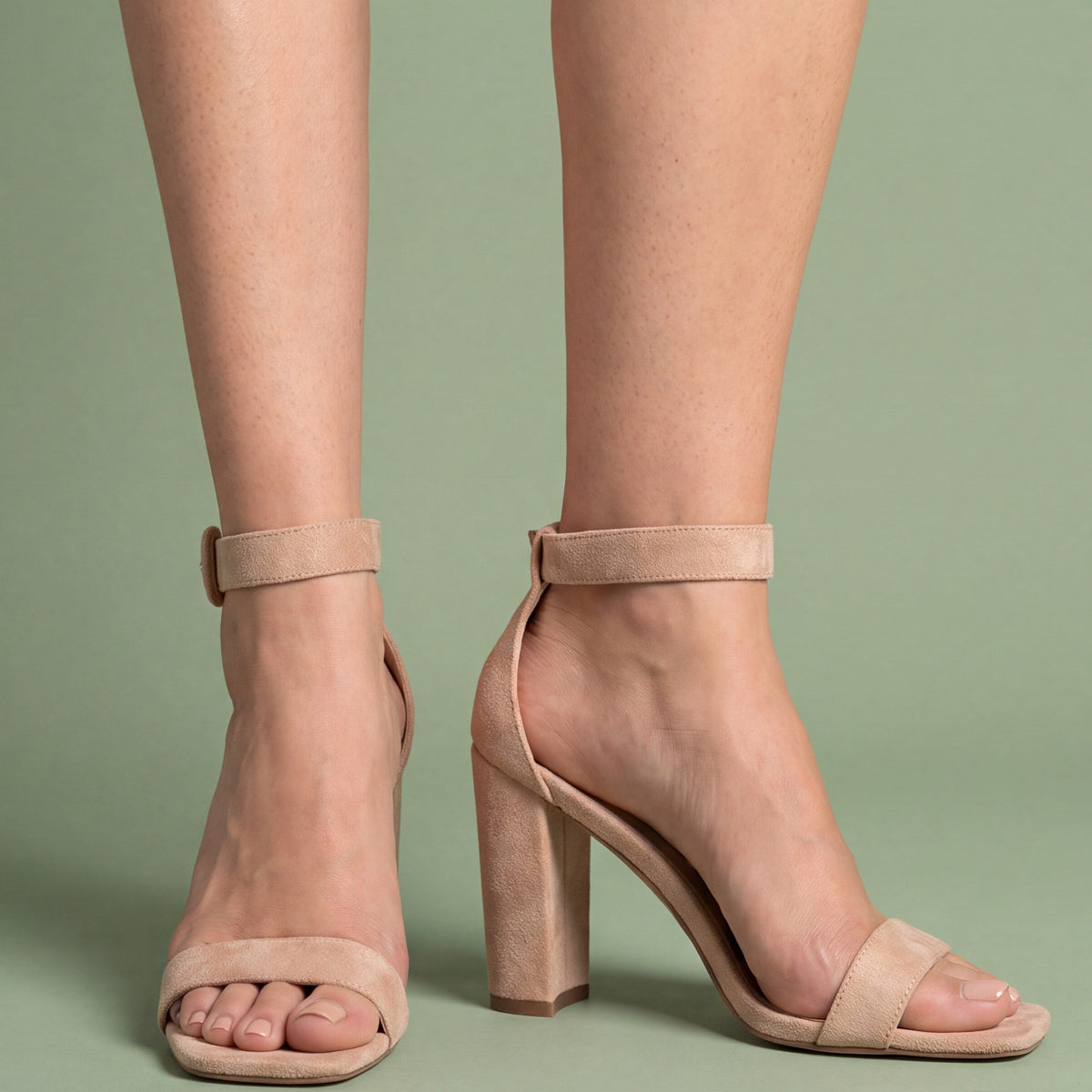
Straps should hold your foot without crossing a joint. Two patterns work well for most people: a wide strap across the instep, which spreads pressure over a large area, and an ankle strap, which stops your foot sliding forward in a heel. Thin straps directly over the little toe joint or across the widest part of the foot are the usual culprits when a sandal rubs.
Elastic or adjustable straps are worth seeking out if your feet change size through the day, which in an Australian summer they will. Browse sandals to compare strap shapes.
3. Heel height and the shape underneath it
The number matters less than the surface area. A 6cm block heel or a wedge is far more stable than a 4cm stiletto, because your weight lands on a platform rather than a point. A wedge also keeps the angle between heel and toe gentler, which is why it works for a long event when a court shoe does not.
- Walking and errands: cushioned flat or low platform.
- Standing for hours: wedge or block heel with an ankle strap. See heels and wedges.
- Dressier evenings: a low block heel in a metallic or satin finish.
4. Width, not just length
Half the sandals that feel wrong are simply too narrow. The signs: the straps bulge, your foot overhangs the edge of the sole, or the shoe feels fine standing and tight walking. A wider cut or a cutout upper gives the foot room to spread without going up a size and losing the heel.
Look for wide-fit and cutout styles in flats if that is familiar.
How to judge fit at home
Try new sandals on late in the day, standing up, on a hard floor rather than carpet. Your heel should not lift more than a few millimetres when you walk, and there should be a small gap, roughly a fingernail, between your longest toe and the front edge. Then walk for five minutes. Almost every rubbing point shows up inside five minutes.
Common questions
Are flat sandals or low heels better?
Neither wins outright. A completely flat, unpadded sole gives no cushioning; a very high heel loads the front of the foot. A small heel or wedge over a cushioned footbed is the comfortable middle.
Which sandals work for a dressy occasion?
A block heel with an ankle strap, or a woven or metallic flat if you would rather not wear a heel. Both sit comfortably at a wedding or a race meeting. See what to wear to the races.
How do I stop new sandals rubbing?
Wear them indoors for short stretches first, and choose a strap that crosses soft tissue rather than bone. If a strap is already marking your foot in the shop, it will not soften into shape.