Race day is the one invitation that tells you almost nothing and the dress code that tells you everything. Between spring carnival meetings, country cups and the long lunches that go with them, most of us want a single outfit that behaves on grass, holds up in the wind and still looks composed in photographs three hours in.
Here is how to build that outfit without buying something you will wear exactly once.
Read the dress code before you read the trend
Most Australian racecourses ask for smart daywear rather than black tie. In practice that means a dress or a co-ord in a considered fabric, closed or dressy open shoes, and something on your head if you want the full look. Members' enclosures are usually stricter: no denim, no activewear, no rubber thongs, and shoulders often covered. Check the club's website the week before — codes change by enclosure, not just by venue.
If you would rather not decode it every time, a printed or plain midi dress with a defined waist sits safely inside almost every daywear code in the country.
Midi length does the most work
Spring at the track means sun, then wind, then a cool gust across an open lawn. A midi hem is long enough to stay decent when the breeze picks up and short enough that it is not dragging through wet grass. Look for a hem that finishes at mid-calf, a waist seam you can define with a belt or a tie, and a sleeve — flutter, short or elbow — if you would rather not carry a jacket.
Our summer packing guide uses the same logic for holidays: one silhouette that handles several settings.
Browse midi dresses for the easiest starting point, or the full Races & Occasion edit if you want everything in one place.
Choose a heel you can stand in for six hours
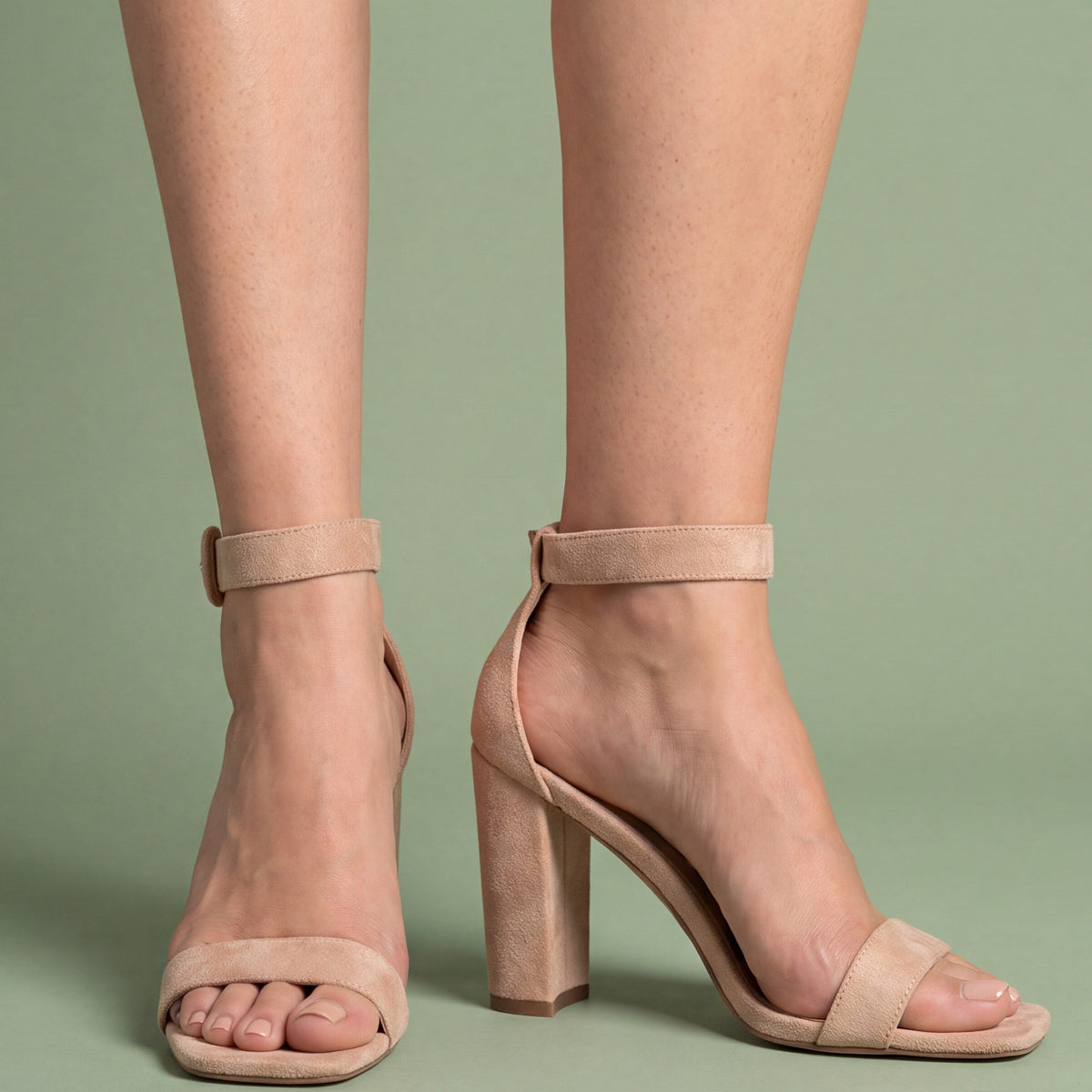
A stiletto and a grass lawn are a bad pairing. Heels sink, the ground is uneven, and you will be standing far longer than you expect. A block heel spreads your weight, a wedge does the same while adding height, and both photograph as dressy as anything thinner.
Two practical checks: a strap across the ankle stops your foot sliding forward on a slope, and a heel under about seven centimetres is the difference between staying for the last race and hunting for a seat. See heels and wedges for block and wedge options.
Hats, fascinators and the finishing touches
A hat with a brim is the more practical choice for a sunny meeting and reads as more classic past fifty; a fascinator is lighter and easier to travel with. Either way, match the colour to your shoes rather than your dress, and keep jewellery small — a race day outfit already has a lot going on.
Carry a small structured bag with a strap. You will be holding a glass, a phone and a program at the same time.
Three outfit formulas that always work
- Classic daywear: printed midi dress, tan block heel sandal, straw brim hat, small cross-body bag.
- Quiet and polished: plain midi in a single colour, satin or metallic flat, slim belt, one statement earring.
- Co-ord instead of a dress: a matching two-piece set with a wedge — the same look, and both halves get worn again separately.
Common questions
Can I wear a maxi dress to the races?
Yes, as long as the hem clears the ground when you walk. A maxi dress in a fluid fabric with a defined waist suits a country meeting especially well.
Are flat shoes acceptable?
They are, and they are the sensible choice if you are walking between marquees all day. A dressy woven or metallic flat keeps the outfit smart in a way a casual sandal will not.
What colours work best?
Spring meetings lean into colour and print. If you would rather not wear a bold print, a single strong colour head to toe photographs beautifully and is far easier to accessorise.
When the season moves on to weddings, the same rules mostly carry over — see summer wedding guest outfits.